
One person, part of the story
Build a credible NPC listener around the words the party actually said. Keep the heard fragment and missed context clear, so the complication belongs to this conversation.
NPC & social
A fragment of conversation.
One credible listener.
A complication you can play.

Someone was listening
Prepare a social complication without rewriting the party’s conversation.
Build a credible NPC listener around the words the party actually said. Keep the heard fragment and missed context clear, so the complication belongs to this conversation.
Prepare a next move, possible spread and a fair warning sign. The Dungeon Master plays the listener; the players decide how to respond.

Plans, secrets and passing remarks
A white-aproned server glances back at four companions talking around a map, sealed envelope, keys, locket and treasure chest on a harbour terrace.
Set whether the conversation concerns a plan, private matter, insult, argument, gossip, name, confession or treasure location. Keep the exact fragment beside what the listener did not hear.
What you can prepare
Make the listener’s knowledge specific and the next scene practical.
Describe the NPC, the party and their established relationship. Give the listener a believable reason to be close enough to hear part of the conversation.
Keep what the party actually said beside the exact fragment the NPC heard. Separate missing or misunderstood context from the original words.
Shape a party plan, private matter, insult, argument, gossip, important name, confession or treasure location into a specific social complication.
Set the importance from a stray remark or snippet to a dangerous secret or words that could change everything. Match the tone to your table.
Explain where the listener stood and how much reached them. Use distance, imperfect privacy and available context to make the fragment credible.
Prepare what the listener might do, who else could hear about it and a fair sign that someone was listening. Leave the outcome open.
Get two options for responding to the overheard fragment, two hooks, two table tips and a private Dungeon Master note. Choose what fits the scene.
Start with NPC, party, place, weight and tone. Deep adds the subject, next move, shared history, things to avoid and private context.
Lock, change and edit sections. Save and reopen versions, or duplicate one to explore a variation while keeping your preferred preparation.
Choose the full Dungeon Master dossier or a player-facing warning. Review the intended audience and contents before sharing, especially after edits.

Location, hearing and warning signs
A server listens behind a curtain beside a spilled cup while companions discuss a paper in the doorway. The street beyond and objects near the doorway give the conversation its setting.
Describe where the NPC heard the words, the context they missed and what they might do next. Add possible spread and a fair sign of their attention, so the table has something concrete to notice.
Quick or detailed preparation
Choose the detail you need for this conversation.
Set the NPC, party, conversation location, established facts, weight and tone. Keep the actual words as the basis of the result.
Use Deep preparation to identify the topic and what the listener might do, from keeping quiet or offering help to selling information or confronting the party.
Supply shared history, private context and things to avoid. Make the suggested behaviour fit the person and the campaign.
Read the fragment, missed context, next move, spread and warning sign together. Edit the result before bringing it to the table.

Practical options for responding
The server speaks to a blue-uniformed guard beside the party’s map table. A red-haired companion marks a route while the others listen near guarded storehouse doors.
Prepare two damage-control options, two hooks and two table tips. Use them as openings for explanation, misdirection, confrontation or changed plans; the players choose their approach and the table plays the outcome.
Refine, revisit and share
Save the preparation you want, then choose who should see it.
Lock, change and edit sections as you shape the listener and conversation. Review retained text alongside any changes.
Save and reopen a version, or duplicate it to explore another variation of the overheard conversation.
Keep the full conversation, listener’s understanding, private note and practical options together. Copy, export JSON or print for your preparation.
Choose a player-facing warning when sharing at the table. Check the intended audience and contents before sharing, especially after manual edits.
Your workspace and related products
Open VISINVOKE products through your account.

Open NPC Overheard Something in the Generators collection of your signed-in desktop workspace. Prepare, refine and export the conversation complication from the same product home.
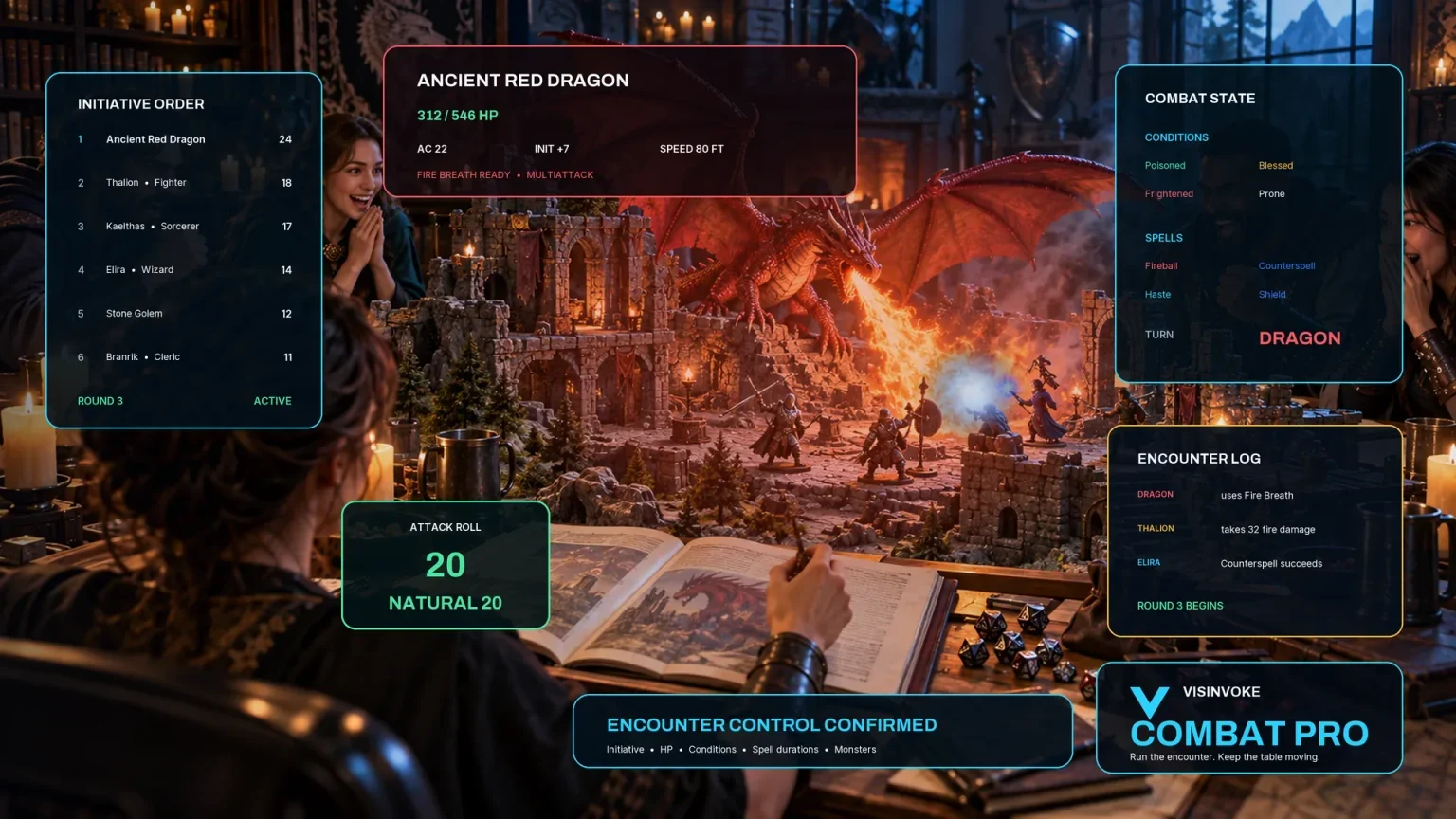
Use the separate encounter workspace when preparing combat. NPC Overheard Something prepares a listener and social complication, leaving the party’s choices and the outcome with your table.
Images are product illustrations. Suggested next moves and damage-control options leave player choices open.
Questions and answers
Conversation, preparation, refinement and sharing at a glance.
One credible NPC who hears part of a party conversation. The result separates the actual words, heard fragment and missed context, then gives the listener a next move, possible spread, a warning sign and practical damage-control options.
Party plans, private matters, insults, arguments, gossip, important names, confessions and treasure locations. Set the weight and tone to suit a passing remark, dangerous secret or more consequential revelation.
Quick starts with the NPC, party, conversation location, weight and tone. Deep adds the overheard subject, next move, shared history, things to avoid and private context.
Keep the actual conversation intact. The listener may miss context or misunderstand a fragment; review that interpretation against the words and established facts you supplied. Players decide whether and how to confront, explain, misdirect or change plans.
Lock, change and edit sections, save and reopen versions, or duplicate a variation. Copy, export JSON or print the full Dungeon Master dossier or player-facing warning. Review the contents for the intended audience after changes.
Create a free VISINVOKE account or sign in, get Desktop Control Centre through your account installer page and open NPC Overheard Something in the Generators collection. View current subscription details in your account.
Continue in VISINVOKE
Create a free VISINVOKE account or sign in to your existing account. Get Desktop Control Centre through your account installer page.
Open NPC Overheard Something in the Generators collection. View current subscription details in your account.